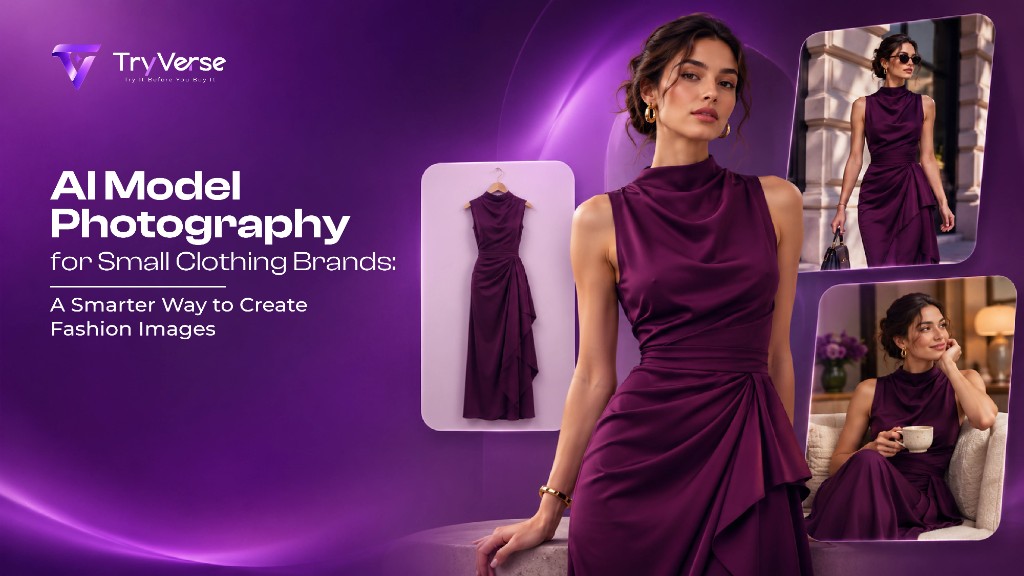
For a small clothing brand, producing professional fashion photography can be just as challenging as designing the collection itself. Between hiring models, arranging photoshoots, renting studios and editing images, creating high-quality product visuals requires time, planning and a considerable budget.
The challenge becomes even greater when a brand regularly introduces new products. Every collection needs fresh images, and businesses must also create content for their websites, social media platforms, advertisements and promotional campaigns.
This is where AI model photography for small clothing brands is becoming an interesting alternative.
Artificial intelligence is changing how fashion businesses approach product photography. Instead of relying entirely on traditional photoshoots, brands can use AI-powered tools to create virtual model images, explore different visual styles and produce additional fashion content using existing product photographs.
For smaller businesses, this creates an opportunity to improve their visual presentation without organizing a traditional photoshoot for every product.
But how does AI model photography actually work, and can it deliver the quality that fashion customers expect? Let's explore.
1. Why Small Clothing Brands Struggle With Traditional Photography
Professional photography is an important part of selling clothing online. Customers cannot physically examine products, so they depend heavily on images to understand how garments look and fit.
Established fashion retailers often have dedicated photography teams and production budgets. Smaller brands usually have to manage these requirements with limited resources.
A traditional fashion photoshoot may involve:
- Hiring professional models.
- Booking photographers and studios.
- Arranging lighting and equipment.
- Organizing styling, makeup and accessories.
- Editing and retouching photographs.
These costs can add up quickly, particularly when a business has dozens of products or releases new collections frequently.
There is also the challenge of producing different types of content. A brand might need clean product images for its website, lifestyle photography for Instagram and campaign visuals for paid advertising. Organizing separate photoshoots for every creative requirement is not always practical.
For small clothing brands, the problem is not simply taking attractive pictures. It is maintaining a consistent supply of professional fashion content without making production unnecessarily expensive or complicated.
2. What Is AI Model Photography?
AI model photography uses artificial intelligence to generate or transform fashion images featuring virtual models.
Instead of arranging a physical photoshoot every time a brand wants to present a product differently, businesses can use AI-powered platforms to create digital fashion visuals.
Depending on the technology, these tools can support:
- Virtual models wearing clothing.
- Different model poses and compositions.
- Studio-style product photography.
- Lifestyle-inspired fashion images.
- Alternative backgrounds and visual concepts.
For example, imagine a small clothing business selling an oversized black sweatshirt. The brand already has a product photograph showing the sweatshirt against a plain background. An AI fashion photography platform may allow the business to create additional images featuring a virtual model wearing the garment, without arranging another physical photoshoot.
The result can provide a more engaging presentation of the product while giving the brand additional material for its website and marketing campaigns. However, the quality of the result depends on the technology, source image and level of garment accuracy.
3. How AI Model Photography Works
Although different platforms use different technologies, the general process involves a few important steps.
Step 1: Upload the product image
Start with a clear photograph of the garment. Good lighting, visible details and an uncluttered background can help produce better results.
Step 2: Select a virtual model
Choose a model presentation that matches the brand's audience and identity. A streetwear brand, for example, may prefer a different visual style from a premium women's clothing label.
Step 3: Generate the fashion image
The AI platform processes the garment and generates a model-based visual. Depending on the platform, users may also be able to explore different poses, backgrounds and creative directions.
Step 4: Review the output
Compare the generated image with the original garment. Check the fabric, colors, proportions, patterns and other product details.
Step 5: Prepare images for marketing
Once approved, the images can be adapted for product pages, social media, website banners and advertising campaigns. The objective is to create a repeatable process that makes fashion content production more flexible.
4. What Types of Fashion Images Can Brands Create?
AI fashion photography offers more possibilities than simply placing clothing on a virtual model. Small clothing brands can explore different visual formats depending on their marketing requirements.
Studio-style product photography
Studio images are useful for e-commerce websites because they keep attention on the clothing. Brands can experiment with clean backgrounds, different model poses and consistent product presentation.
Lifestyle fashion photography
Lifestyle images present clothing in a particular environment or setting. For example, a casual clothing brand might create urban-inspired visuals, while a summer collection could use outdoor-inspired backgrounds. These images help communicate the personality of a collection.
Editorial fashion images
Editorial photography focuses on creative presentation, distinctive compositions and styling. AI tools can help smaller brands experiment with different campaign concepts without immediately committing to expensive production.
Social media content
Fashion brands constantly need fresh content for Instagram, Pinterest and other platforms. AI-generated fashion images can provide additional creative variations for product announcements, seasonal promotions and collection launches. The key is to create images with a clear purpose rather than generating large quantities of repetitive content.
5. AI Fashion Photography vs. Traditional Photoshoots
| Consideration | Traditional photography | AI model photography |
|---|---|---|
| Physical models | Usually required | Virtual models can be used |
| Studio rental | Often required | May not be necessary |
| Creative variations | May require additional shoots | Can be generated digitally |
| Production coordination | Often involves multiple people | Can involve fewer steps |
| Product accuracy | Captures the physical garment | Requires careful verification |
| Creative experimentation | Depends on shoot resources | Offers flexible visual exploration |
Does AI model photography replace traditional fashion photography? Not entirely. Both approaches have different strengths.
One of the biggest advantages of AI-assisted photography is the potential to reduce production requirements. However, AI tools are not automatically free or effortless. Businesses may still need subscriptions, editing, image reviews and quality control.
Traditional photography also remains valuable for major campaigns, detailed product representation and situations requiring physical creative direction. For many businesses, combining both approaches is the most practical solution.
6. Why Garment Accuracy Matters
There is one issue clothing brands should never overlook: the generated image must represent the actual product.
An AI-generated photograph might look beautiful but still change important garment details. A white cotton shirt could appear with a different collar shape, altered buttons or unrealistic fabric texture. These differences can create misleading expectations for customers.
Before publishing AI-generated fashion images, brands should check:
- Whether the original garment color is preserved.
- Whether patterns, logos and prints remain accurate.
- Whether the fabric looks realistic.
- Whether the garment proportions are correct.
- Whether the model's pose looks natural.
AI photography should improve product presentation, not change the product itself. For e-commerce stores, maintaining accurate product representation is essential for customer trust.
7. How Small Clothing Brands Can Build a Better Photography Workflow
The real opportunity is not generating one impressive image. It is developing a consistent workflow that can support the business as its product catalog grows.
A practical approach starts with a well-organized product image library. Keep original product photographs organized by collection, category and SKU. This makes it easier to locate source images and create additional content when needed.
Next, establish a consistent visual identity. Decide what types of models, backgrounds, lighting and compositions reflect the brand. Without these guidelines, images may look disconnected across the website.
Then identify the images each product actually needs. For example, a clothing item might require an original product photograph, a virtual model presentation, a lifestyle image and a promotional visual for social media.
Finally, introduce a quality-control process before publishing. Measure the cost per approved image, production time and performance of product pages. This helps determine whether AI photography is genuinely improving the business.
Producing more images does not automatically mean generating more sales. The goal is to produce better and more useful content.
8. Beyond AI Model Photography: The Role of Virtual Try-On
AI model photography is part of a broader transformation in fashion e-commerce.
While virtual model photography helps brands create fashion images, virtual try-on technology addresses another important customer question: How would this clothing look on me?
These technologies serve different purposes. AI model photography creates visuals featuring virtual models. Virtual try-on allows shoppers to explore how clothing might look on themselves using AI-powered technology.
For online fashion retailers, this creates opportunities to make the shopping experience more interactive. A brand can use professional product photography to showcase its collection, AI-assisted visuals to develop additional marketing content and virtual try-on to give customers another way to explore products.
This is where platforms such as TryVerse fit into the evolving fashion technology landscape.
TryVerse brings together AI-powered fashion experiences, virtual try-on and digital styling capabilities to help fashion businesses explore new ways of presenting and experiencing clothing.
Rather than treating fashion technology as just another image-generation feature, the broader opportunity is to connect product presentation with interactive shopping experiences. For retailers, this means moving beyond static product images and exploring more engaging ways to connect customers with their collections.
Conclusion
Producing professional fashion photography has traditionally required significant time, coordination and financial resources. For small clothing brands, maintaining a consistent supply of high-quality images can become a challenge as product catalogs and marketing requirements grow.
AI model photography offers another approach. By using AI-powered tools, businesses can experiment with virtual models, create additional fashion visuals and develop more flexible content-production workflows.
However, successful implementation requires more than attractive generated images. Garment accuracy, visual consistency and honest product representation must remain priorities.
The real value of AI model photography for small clothing brands lies in making fashion content production more flexible while maintaining the quality customers expect.
As AI fashion photography, digital styling and virtual try-on continue to develop, smaller businesses have an opportunity to explore tools that can help them compete in an increasingly visual fashion market.